
The bowl's steepest, sunniest address
Higgovale climbs the mountain's lower slopes above Oranjezicht — narrow, winding roads, mature gardens, and some of the most architecturally ambitious homes in the Bowl, many with walls of glass looking straight down over the city.
Big glass, big sun, no room for a bad specification
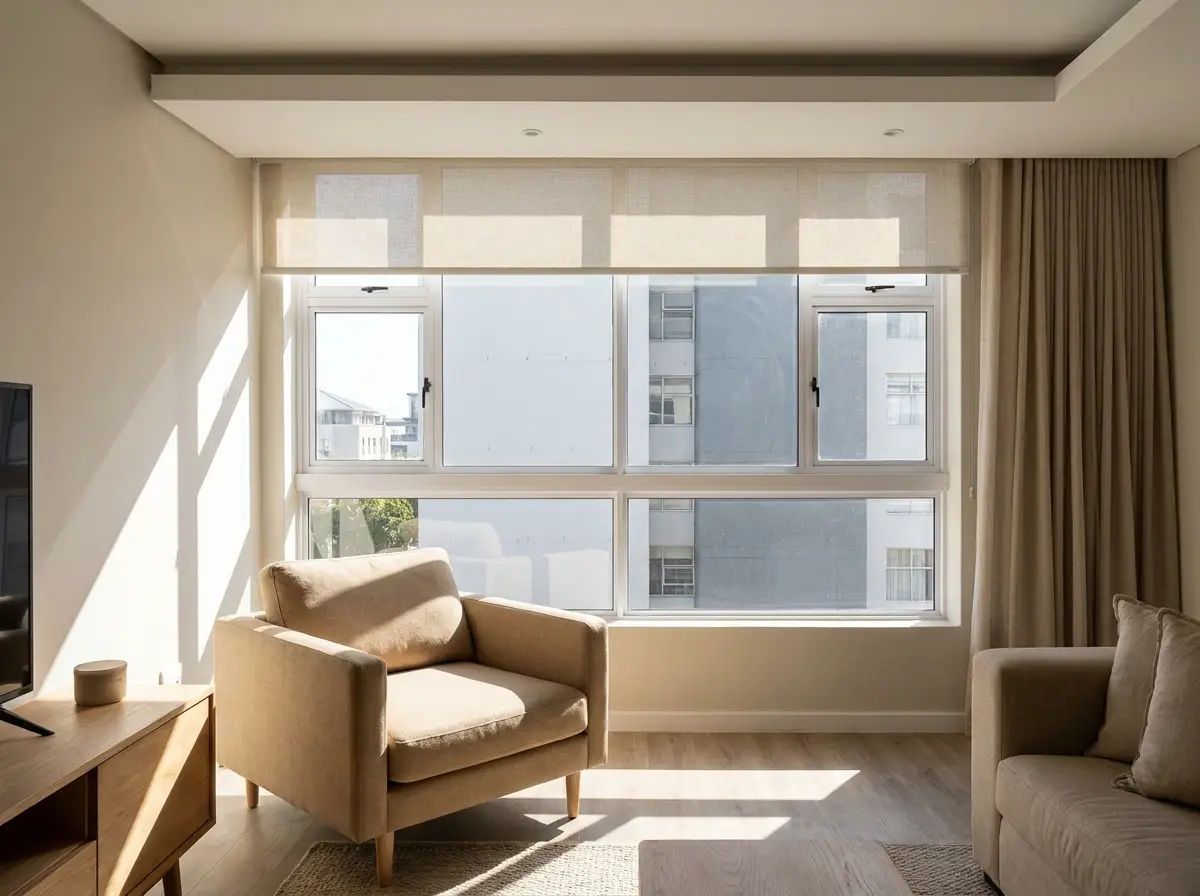
Higgovale's architect-designed renovations tend to favour frameless glazing and double-volume rooms — which means concealed, ceiling-recessed blinds and motorisation aren't a luxury add-on here, they're usually the only sensible way to shade a window that size.
Being high on the slope also means catching the sun earlier and holding it longer than streets lower in the bowl — sunscreen and blockout fabrics both earn their place, often on the same wall of glass, layered for different times of day.
What most Higgovale briefs end up ordering
Read the City Bowl Light & Shade Playbook
Our free, researched guide to the Bowl's sun, wind and heritage — window by window, with the honest trade-offs both ways. Mark what fits your home and carry it into a two-minute ballpark or a free measure.
Higher up, the sun arrives earlier and leaves later
Higgovale climbs the lower slopes below Lion’s Head, and its streets follow the contour rather than the compass, so houses here are usually turned to the view instead of to the road. You cannot read the aspect off a map, which is why a compass comes out in every room before anything is recommended. What is consistent is exposure. Very little stands between these stands and the sky, so the June sun at roughly 31 degrees due north comes in under every eave, and the midsummer sunset at 240 degrees lands on the south-west face of the house with the whole city below it and nothing in the way.
On glass that size the honest answer is often to stop the heat outside the pane rather than after it. An interior blockout absorbs the energy once it is already through the glass, and the pane and the fabric then radiate it back into the room; an external system takes it before the glass ever warms. Where exterior is not possible or not wanted, sunscreen mesh in front of a blockout on a double bracket is the second best, and we will say so plainly rather than pretend otherwise. Inside, the double-volume voids and frameless glazing are why motorisation and ceiling-recessed pockets come up so often here: nobody is reaching a chain four metres up, and a hidden pocket is what keeps a minimal room minimal.
Wind is the other half of the brief. The south-easter funnels hardest across the upper slopes between October and March, so an awning or a screen on a balcony here gets specified wind-rated and, wherever the budget allows, motorised with a sensor that retracts it before a gust does the damage for you. Mesh tensioned inside side channels copes with exposure that an open awning arm will not. One planning point worth raising early: a recessed pocket has to be built rather than bolted on, so it is a renovation-stage decision. Retrofitting one into a finished ceiling means opening that ceiling up.
Bring us in early on a Higgovale renovation
A free in-home visit, an itemised written quote, no obligation.