
Shading designed into the ceiling, not bolted on after
The fabric drops from a slim ceiling slot or bulkhead recess — hardware fully hidden. Raised, the window is completely clean: glass, frame, nothing else. It's the answer of choice for the double-volume renovations going up behind Oranjezicht and Higgovale's Victorian street fronts.
Architect-designed and renovated homes
- Frameless glass, double-volume voids and minimalist detailing — exactly the brief on a Higgovale mountain-slope rebuild.
- New builds and major renovations, where the recess can be planned into the ceiling — the earlier we're in the drawing stage, the cleaner the result.
- Retrofit is possible too, with surface bulkheads or slim cassette pelmets colour-matched to the ceiling.
Detail that gets specified, not guessed
Recess dimensions vary by blind type — a roller typically needs roughly 110–150mm depth depending on tube and fabric drop, but we get the exact specification per system at quote stage rather than guessing on site.
Almost always motorised — hand-reaching into a ceiling slot rather defeats the point. We coordinate with downlights, aircon slots and curtain pelmets at design stage, ideally alongside your architect or contractor.
Detailed to disappear, not just to fit
A recess left too shallow or too short is the commonest way this product goes wrong — the fabric catches the lip, or a sliver of tube shows at the end of the slot. We template the exact opening against the blind system specified, not a generic allowance, so the ceiling reads as one clean plane.
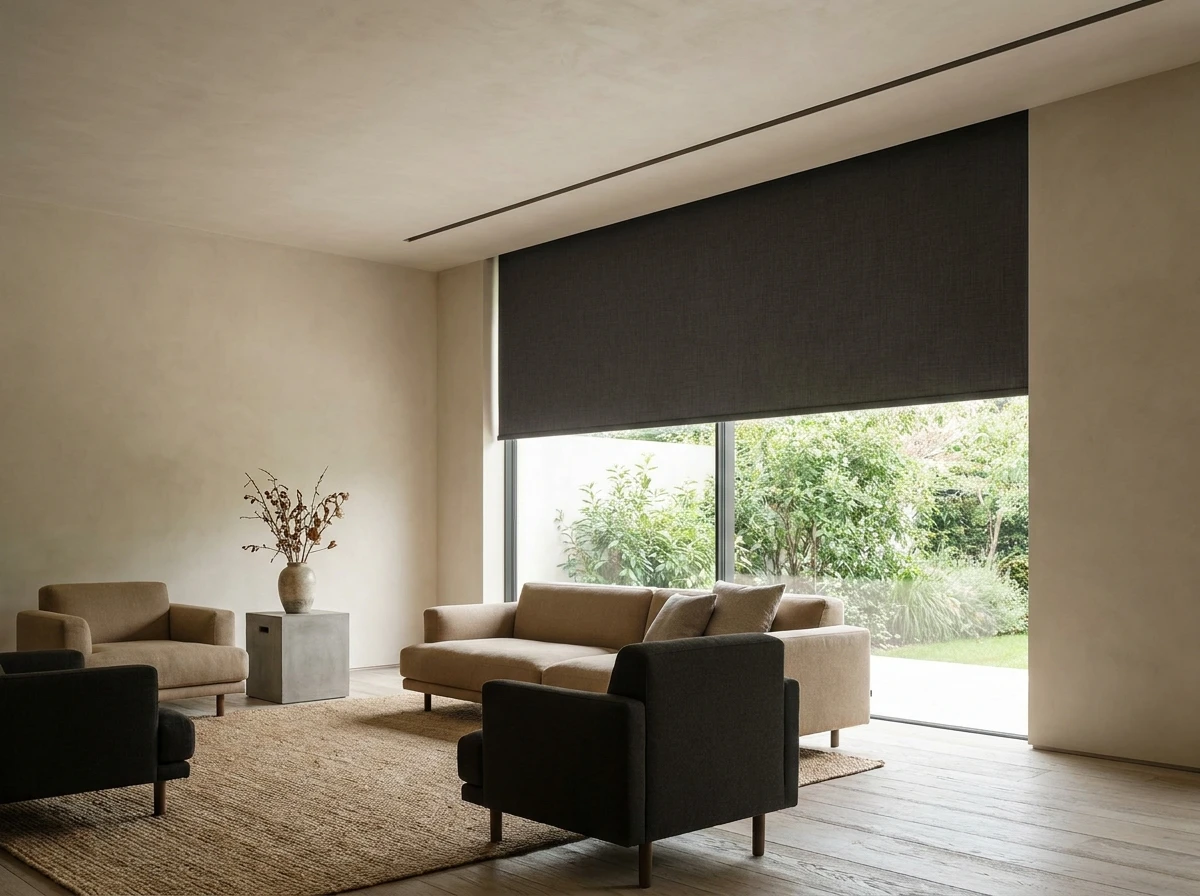
Concealed & recessed blinds across the City Bowl
Most requests come from the double-volume renovations behind Higgovale and Oranjezicht's Victorian street fronts, plus architect-designed apartment fit-outs in Gardens and Tamboerskloof — anywhere the brief calls for glass with nothing else showing.
What a recessed system is worth budgeting for
A concealed system is the most involved thing we fit, and the band reflects that. As a guide per square metre installed, allow R1,600 to R3,000 for a hand-operated blind dropping from a ceiling pocket, and R3,200 to R5,000 once it is motorised — which is how most of them end up, because a hidden blind with a visible chain rather defeats the point.
The pocket detail, the drop and how many blinds share one slot all move a job inside that band, and a small opening still carries a minimum charge. Nothing here is priced off a drawing alone: the written figure follows a free measure with the ceiling, the slot and the substrate seen in person.
Bring us in at drawing stage
The earlier we're involved, the cleaner the ceiling detail. A free consult, no obligation.